Driving in the UAE often means navigating roads that border open desert. Whether you are commuting on Sheikh Zayed Road or taking a weekend trip toward Al Ain, the transition from asphalt to sand can happen faster than you expect. A desert pullout is not always a planned stop. Sometimes it is the result of a vehicle breakdown, a moment of distraction, or the need to check a strange noise. Knowing how to handle that situation can save you time, money, and stress.
I have spent years working in roadside assistance across Dubai and the surrounding emirates. I have seen the same mistakes repeated by drivers who underestimate the desert. The good news is that most problems are avoidable with a little preparation and the right mindset. Let me walk you through what a desert pullout really involves and how to manage it when it happens to you.
What Is a Desert Pullout?
A desert pullout is the act of moving your vehicle off the main road and onto sandy ground, either voluntarily or because of an emergency. In the UAE, this often happens along highways that cut through desert stretches, such as the roads connecting Dubai to Abu Dhabi or Ras Al Khaimah. Drivers pull over to check a tire, answer a phone call, or wait for help after a breakdown. The problem is that sand is not a stable surface. What looks like a firm shoulder can be soft sand that traps your vehicle.
I once responded to a call near Sharjah where a driver had pulled over to change a tire. The ground looked solid, but within seconds the rear wheels sank. What should have been a simple tire change turned into a full recovery operation. That is the reality of a desert pullout. It is rarely as simple as it seems.
Why a Desert Pullout Can Go Wrong
The main issue is traction. Sand behaves differently than asphalt or concrete. When you stop on sand, the weight of the vehicle compresses the surface, and the wheels can dig in. If you try to drive out without reducing tire pressure or using the right technique, you will only dig deeper. This is especially true for heavier vehicles. A standard car might manage on packed sand, but a heavy vehicle like a delivery truck or a bus will sink almost immediately.

Another factor is visibility. Many desert pullouts happen at night or during dust storms. Dubai Police frequently warn drivers about the dangers of stopping on sandy shoulders after dark. Without proper lighting, other motorists may not see your vehicle until it is too late. Road Safety in the UAE depends on drivers making smart decisions about where and when to stop.
Common Reasons for a Desert Pullout
People do not usually choose to stop in the desert for fun. The most common triggers include:
- Vehicle Breakdown: A mechanical failure leaves you no choice but to pull over. This could be an engine issue, a flat tire, or a fluid leak.
- Battery Jump Start: Your battery dies, and you need to stop to get a jump or wait for help.
- Fuel Delivery: Running out of fuel on a long stretch between Dubai and Al Ain is more common than you think.
- Lockout Assistance: You lock your keys inside the car. It happens. And when it does, you are stuck on the side of the road.
- Fatigue or Distraction: Sometimes you just need a break, and the nearest safe looking spot is a sandy shoulder.
Each of these situations calls for a different response, but the first step is always the same: stay calm and assess your surroundings.
How to Handle a Desert Pullout
If you find yourself needing to pull over onto sand, follow these steps. They come from years of field experience and align with UAE Traffic Laws and best practices for Emergency Roadside Assistance.
First, slow down gradually. Do not brake hard, especially on a sandy surface. Hard braking can cause your vehicle to skid or dig in. Signal your intention and move to the shoulder as gently as possible. Once stopped, turn on your hazard lights. If you have reflective triangles or flares, place them behind your vehicle to warn approaching traffic. This is critical on high-speed roads like Sheikh Zayed Road.
Second, assess the ground before stepping out. Open your door and check how soft the sand is. If you see that your wheels have already sunk a few inches, do not try to drive out. Call for help. Trying to accelerate out of soft sand will only make the situation worse. A Towing Service with a Flatbed Tow Truck or a Heavy Duty Recovery vehicle is the safest solution.
Third, stay inside your vehicle if the area is unsafe. This might sound obvious, but I have seen people wander away from their cars on busy highways. That is dangerous. If you need to wait for help, remain in your car with your seatbelt fastened. Keep your phone charged and your location shared with someone you trust.

When to Call for Professional Help
Not every desert pullout requires a tow truck. Sometimes a simple Battery Jump Start or Tire Change is enough. But if your vehicle is stuck in sand, or if you are on a remote stretch of road between Abu Dhabi and Ras Al Khaimah, professional recovery is the smart move. A 24/7 Service like Car Recovery Dubai can send a technician who knows how to handle sand extractions without damaging your vehicle.
I have seen drivers try to dig themselves out with bare hands or use cardboard under the wheels. Those methods rarely work on soft UAE sand. A proper recovery uses air bags, winches, or a flatbed to lift the vehicle out. That is the difference between a quick fix and a long, frustrating afternoon.
Heavy Duty Recovery is especially important for larger vehicles. A delivery truck stuck on a dune near Al Ain needs more than a standard tow. It requires a truck with enough power and the right equipment. Trying to pull a heavy vehicle out with a passenger car only risks damaging both vehicles.
Prevention Tips for Desert Driving
The best desert pullout is the one you never have to make. Here are a few things I have learned from years on the road:
- Check your tire pressure before any long trip. Lower pressure can improve traction on sand, but only if you know what you are doing. For normal driving, stick to the manufacturer's recommendation.
- Carry a basic emergency kit. Include water, a flashlight, a first aid kit, and a portable battery pack for your phone. You might also want a small shovel and a piece of carpet or board to place under wheels if you get stuck.
- Know your vehicle's limits. A small car can handle a short pullout on hard-packed sand, but it will struggle on soft dunes. If you are driving a heavy vehicle, plan your routes to avoid unnecessary stops in sandy areas.
- Keep your fuel tank above half. Running out of fuel in the desert is avoidable. Fill up before you leave the city, especially if you are heading toward remote areas like the Empty Quarter or the mountains near Ras Al Khaimah.
- Share your route with someone. If you are driving alone, let a friend or family member know where you are going and when you expect to arrive. This simple step can make a big difference if you lose cell service.
Understanding the Local Context
The UAE has some of the best roads in the world, but the desert is always nearby. Dubai Police have strict rules about stopping on highways, and for good reason. A vehicle stopped on a sandy shoulder creates a hazard for other drivers. If you are involved in an accident because of an unsafe pullout, you could face fines or legal liability. Knowing the UAE Traffic Laws around stopping and parking helps you stay compliant and safe.
On-Site Repair is sometimes possible for minor issues. A technician can fix a flat tire or jump start a battery without moving the vehicle. But if the problem is more serious, or if the ground is too soft, the only option is a tow. That is when you want a service that understands the local terrain and has the right equipment.
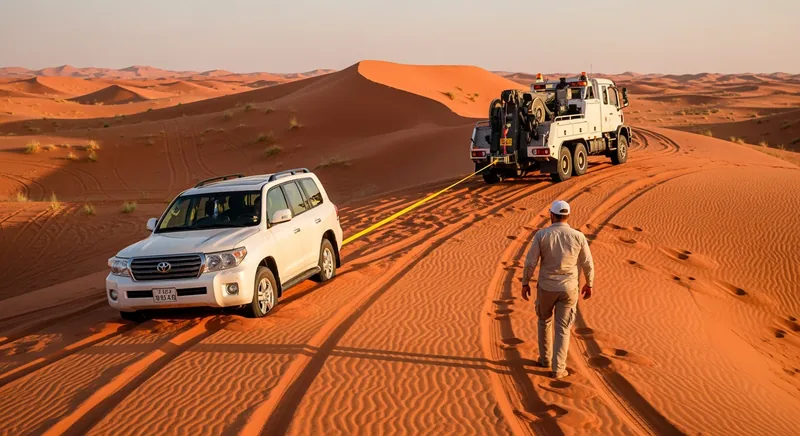
I have worked with drivers who insisted on trying to drive out of soft sand for an hour before calling for help. By the time I arrived, their tires were buried to the axle. A quick call at the first sign of trouble would have saved them an hour of frustration and a bigger repair bill. Do not let pride or impatience turn a small problem into a big one.
Final Thoughts
A desert pullout is a routine event for anyone who drives in the UAE. It does not have to ruin your day. With the right preparation and a clear head, you can handle it safely and get back on the road quickly. Remember that your safety comes first. If you are unsure about the ground, the time of day, or your vehicle's condition, call for professional assistance. The cost of a tow is nothing compared to the cost of an accident or a recovery operation gone wrong.
Whether you are a daily commuter on Sheikh Zayed Road or a weekend explorer heading to the dunes near Al Ain, treat every desert pullout with respect. The sand is beautiful, but it does not forgive mistakes. Stay aware, stay prepared, and you will be fine.